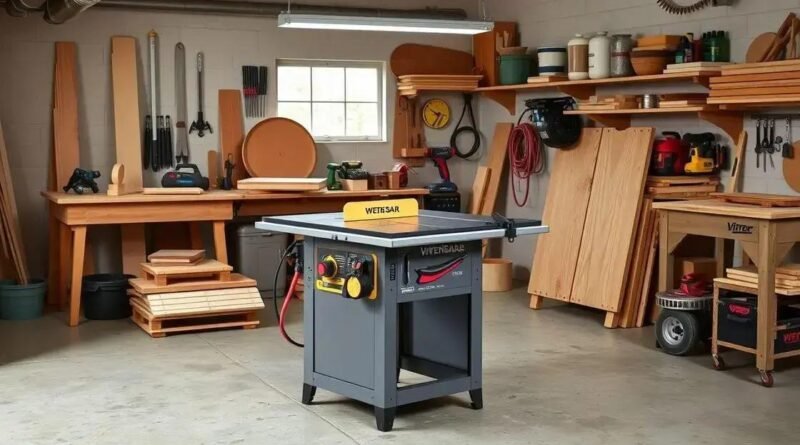
Top rated table saws for DIY wood projects: find your perfect match
Top rated table saws for DIY wood projects include versatile options like the SKIL 3410-02, DeWalt DWE7491RS, and Powermatic PM1000, catering to various budgets while ensuring safety and precision in woodworking.
Top rated table saws for DIY wood projects can make all the difference in your woodworking experience. Have you ever struggled with a project due to the wrong tools? Let’s dive into how the right table saw can elevate your craft.
Understanding the key features of table saws
When it comes to table saws, understanding the key features can significantly impact your woodworking projects. A high-quality table saw is an essential tool that provides accuracy, safety, and efficiency.
Types of Table Saws
There are mainly three types of table saws: portable, bench-top, and cabinet saws. Portable saws are lightweight and ideal for DIYers who need mobility. Bench-top saws offer stability and power in a compact size, while cabinet saws provide maximum performance for serious woodworkers.
Blade Size and Type
The size and type of blade are crucial for achieving different cutting results. Most table saws use a 10-inch blade, which is sufficient for most tasks. Consider using high-speed steel (HSS) or carbide-tipped blades for enhanced durability and cutting performance.
Motor Power
The motor’s power is essential for cutting through various materials. Saw motors typically range from 1 to 5 horsepower. A more powerful motor allows for smoother cuts and can handle tougher materials without bogging down.
Rip Capacity
Rip capacity refers to the maximum width of the material that can be cut. Choose a saw with sufficient rip capacity for your projects, especially if you work with large sheets of plywood or wide boards. Standard rip capacities often range from 24 inches to over 50 inches.
Safety Features
Safety should always be a priority when using power tools. Look for features like blade guards, anti-kickback pawls, and emergency stop buttons. These features can help prevent accidents and make your woodworking experience safer.
Table Surface and Construction
The table surface should be flat and smooth for accurate cuts. Also, consider the material of the saw’s construction. Cast iron tables are typically more durable and stable compared to those made of aluminum.
Additional Features
Many modern table saws come with fences, miter gauges, and dust collection systems to improve your woodworking experience. A good fence is essential for straight cuts, while a dust collection system helps keep your workspace clean.
Top rated models for every budget
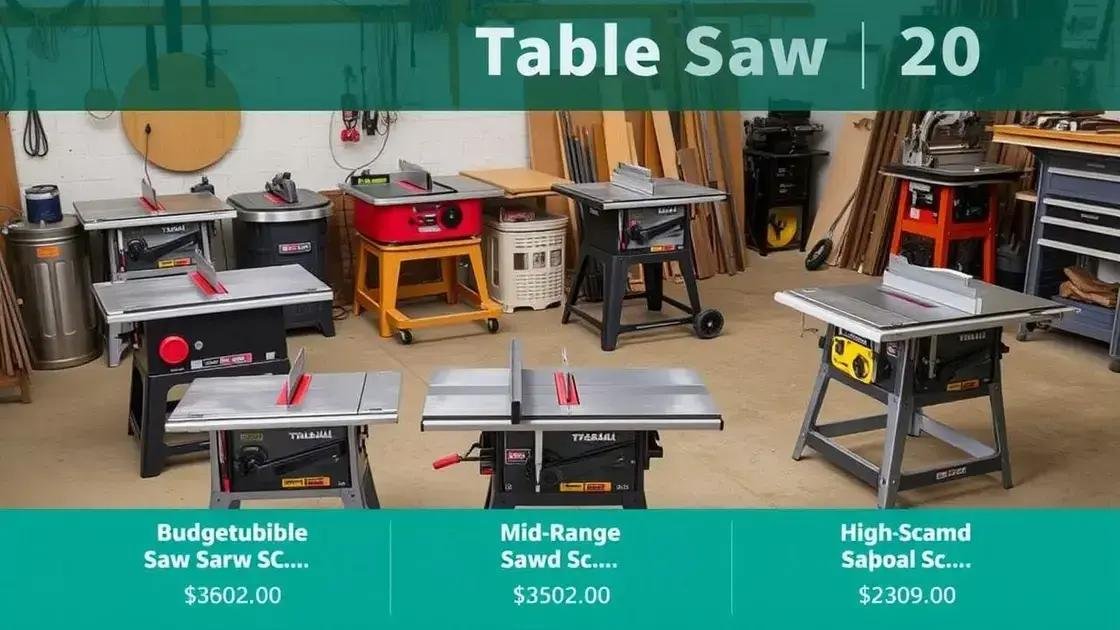
When searching for the top rated table saws, it’s important to find a model that fits your budget and meets your needs. Here are some excellent options across various price points.
Budget-Friendly Options
If you’re just starting out, consider models like the SKIL 3410-02. This table saw offers great value with a 10-inch blade and a compact design. It’s easy to use and perfect for DIY enthusiasts.
Mid-Range Choices
For those who want more features, the DeWalt DWE7491RS is an excellent mid-range option. It boasts a powerful motor and a large rip capacity, making it ideal for larger projects. The rolling stand makes it easy to transport, enhancing its versatility.
High-End Models
If you’re serious about woodworking and willing to invest, look at the Powermatic PM1000. This cabinet saw is engineered for precision and durability with a robust construction. It features a 1.75 HP motor and a premium fence system, ensuring clean cuts every time.
Professional Models
For professionals or serious hobbyists, the SawStop PCS31230-TGP252 is a top contender. Known for its unique safety technology, it automatically stops the blade upon contact with skin, significantly reducing the risk of injury. It also delivers uncompromised performance and accuracy.
Comparison and Considerations
When choosing the right model, consider factors like motor power, blade size, and safety features. Evaluate what projects you’ll be working on to ensure the saw you choose meets your requirements. Reading user reviews and ratings can also provide insight into each model’s performance.
Safety tips when using table saws
Using a table saw can be safe if proper precautions are taken. Here are some essential safety tips to remember when operating a table saw.
Wear Appropriate Safety Gear
Always wear protective eyewear to shield your eyes from wood particles and dust. Additionally, use ear protection to protect your hearing from the noise generated by the saw.
Keep Your Workspace Clean
A tidy workspace reduces the risk of accidents. Ensure that the area around your table saw is free from clutter and that all tools and materials are organized. This allows for safe movement and prevents tripping hazards.
Use Safety Features
Most modern table saws come equipped with safety features. Always use the blade guard and anti-kickback pawls for added protection. Familiarize yourself with these features for safer operation.
Maintain a Safe Distance
Keep your hands at a safe distance from the blade. Using a push stick or push block can help you maintain a safe distance while guiding the material through the blade.
Be Mindful of Blade Height
Adjust the blade height for the thickness of the material you are cutting. The blade should just protrude through the material to avoid unnecessary accidents.
Stay Focused and Avoid Distractions
When using a table saw, stay focused on the task at hand. Avoid distractions like conversations or using your phone. Concentration is key to safe operation.
Know Your Equipment
Familiarize yourself with how your table saw works. Read the manual and understand the controls. Knowing your equipment well can prevent misuse and accidents.
Stop Immediately When in Doubt
If something feels wrong or doesn’t seem right while operating the saw, stop immediately. It’s better to pause than to risk injury. Always prioritize safety.
Maintenance practices for longevity
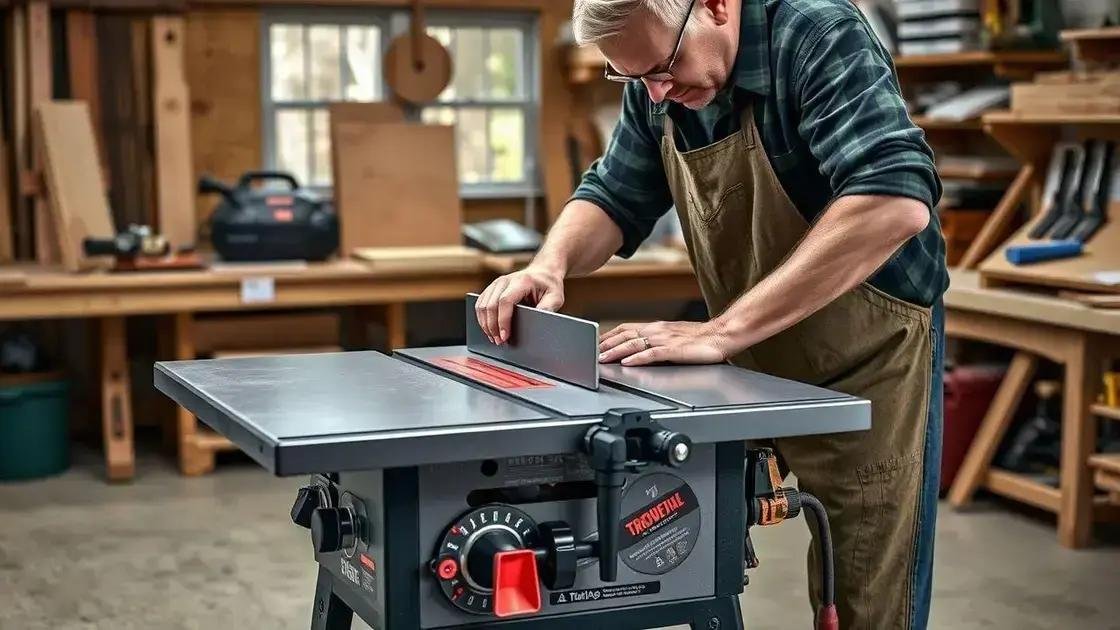
Regular maintenance is crucial for ensuring the longevity and performance of your table saw. By following these simple practices, you can keep your saw running smoothly for years.
Keep It Clean
Dust and debris can accumulate in your table saw, affecting its performance. Regularly clean the table surface and inside cabinet using a soft brush or vacuum. Ensure that no sawdust obstructs vents or moving parts.
Check Blade Sharpness
A dull blade not only makes cutting harder but can also damage your saw. Regularly check the sharpness of the blade and consider replacing it or having it sharpened as needed. A sharp blade ensures clean cuts and reduces strain on your motor.
Lubricate Moving Parts
Many table saws have parts that require lubrication, such as the elevation and tilt mechanisms. Use a suitable lubricant, like machine oil, on moving parts to prevent wear and ensure smooth operation.
Inspect Electrical Components
Regularly check the power cord and plug for any signs of wear or damage. Ensure connections are secure and free from corrosion. If any issues arise, consult a professional for repairs to prevent hazards.
Store Properly
If you’re not using your table saw for an extended period, store it in a dry, clean area. Consider covering it to protect it from dust and moisture. A proper storage environment can significantly enhance its longevity.
Calibration and Alignment
Over time, your table saw may go out of alignment. Regularly check and calibrate the fence and blade alignment to ensure accuracy with each cut. This keeps your cuts precise and minimizes wear on your blades.
How to choose the right blade
Choosing the right blade for your table saw is crucial for achieving the best results in your woodworking projects. The blade impacts the quality of cuts and the type of materials you can work with.
Understand Blade Types
Table saw blades come in different types, including rip blades, crosscut blades, and combination blades. Rip blades are designed for cutting along the grain, while crosscut blades are suitable for cutting across the grain. Combination blades provide versatility for both types of cuts.
Consider Tooth Count
The number of teeth on a blade affects the cut quality and speed. Blades with fewer teeth (around 24) produce faster cuts and are ideal for ripping, while blades with more teeth (up to 80 or more) provide smoother cuts for cross-cutting and fine finishes.
Blade Material Matters
Most table saw blades are made from high-speed steel (HSS) or carbide-tipped materials. Carbide-tipped blades are more durable and can withstand heat longer, making them ideal for extended use.
Choose the Right Diameter
The diameter of the blade is another crucial factor. Most table saws use a 10-inch blade, but check your saw’s specifications. Larger blades can cut thicker pieces but require more power.
Look for Specialty Blades
Depending on your projects, consider specialty blades such as dado blades for making grooves or laminate blades for cutting plastic and thin materials. Special blades can aid in achieving precise and professional results.
Check Compatibility
Always ensure that the blade you choose is compatible with your table saw. Check the arbor size and make sure the blade will fit snugly and securely on the saw.
Enhancing precision with additional tools
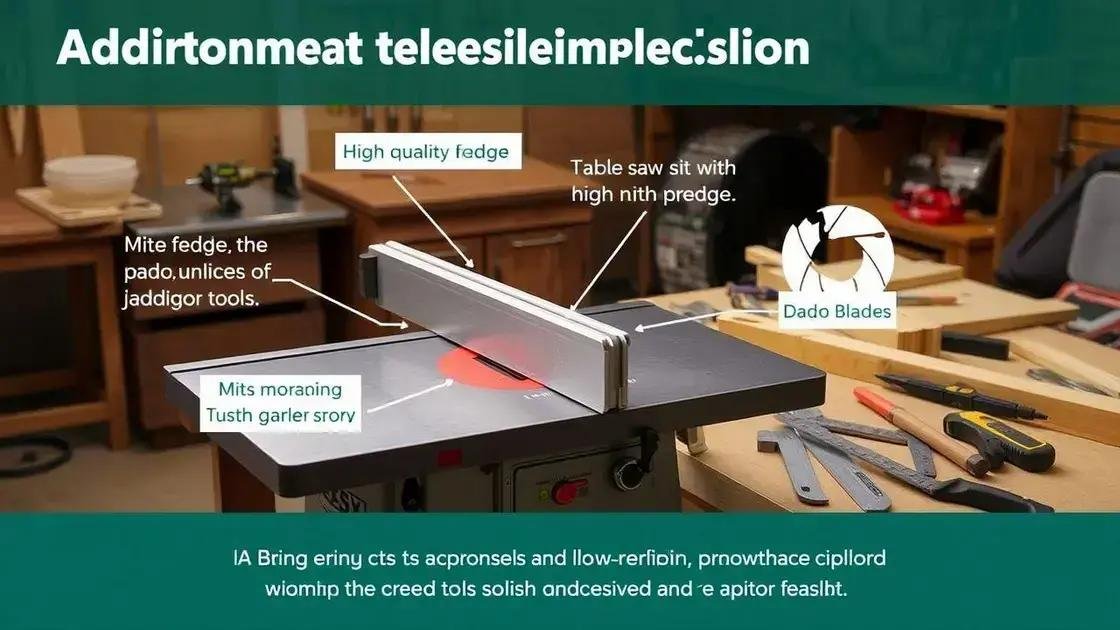
Enhancing precision in your woodworking projects can significantly improve the overall quality of your work. Utilizing additional tools alongside your table saw can help you achieve greater accuracy and consistency.
Use a Quality Fence
One of the best ways to improve precision is by using a high-quality fence. A reliable fence helps keep your material straight and secure while cutting, preventing any drift that can lead to uneven edges.
Incorporate a Miter Gauge
A miter gauge is essential for making accurate angled cuts. It allows you to easily set the angle you need, ensuring that your cuts are clean and precise. Invest in a durable miter gauge that fits your table saw snugly.
Utilize Dado Blades
Dado blades are excellent for making wide grooves in wood. By using these specialized blades, you can create precise dado cuts that are essential for joinery, such as in shelving or cabinetry. This adds both functionality and aesthetics to your projects.
Employ Measuring Tools
Accurate measurements are critical. Use tools like a caliper, tape measure, and square to ensure your measurements are correct before making cuts. Always double-check your measurements to avoid mistakes.
Consider a Laser Guide
A laser guide can enhance your cutting accuracy even further. It projects a line onto your workpiece, showing exactly where the cut will be made. This feature is particularly useful for work requiring extreme precision.
Maintain a Consistent Feed Rate
When using your table saw, maintain a consistent feed rate for materials being cut. Pushing the material too quickly can lead to rough cuts or even kickbacks. Take your time to ensure a smooth feeding process.
Common mistakes to avoid while using
Using a table saw can be straightforward, but there are common mistakes that many users make. Avoiding these errors can enhance safety and improve the quality of your cuts.
Neglecting Safety Gear
Many users disregard the importance of wearing safety gear. Always wear protective eyewear and hearing protection. This simple step can prevent serious injuries during operation.
Not Checking Blade Alignment
Failing to check the alignment of the blade can lead to inaccurate cuts. Ensure that your blade is parallel to the miter slot and that it is set at the correct height before making cuts.
Improper Material Support
Failing to properly support the material can lead to accidents. Always ensure that your workpieces are adequately supported during cuts to prevent pinching or kickback, which can be dangerous.
Rushing the Cutting Process
Taking your time is crucial when using a table saw. Rushing through cuts can result in mistakes and injuries. Focus on maintaining a steady feed rate to achieve clean cuts.
Ignoring Maintenance
Neglecting regular maintenance can affect performance. Keep your table saw clean, check the blade sharpness frequently, and lubricate moving parts to ensure optimal performance.
Not Using Push Sticks
Using your hands too close to the blade is a common mistake. Always use push sticks or push blocks to guide the material safely without risking injury to your fingers.
Overreaching During Cuts
Standing too close to the table saw and overreaching can lead to accidents. Maintain a safe distance from the blade and position your body properly to ensure safety while cutting.
Failing to Remove Loose Clothing and Jewelry
Wearing loose clothing or jewelry while operating a table saw is unsafe. Ensure that you wear fitted clothing and remove any jewelry to prevent them from getting caught in the saw.
DIY project ideas with table saws

A table saw is a versatile tool that can be used for various DIY projects. Here are some creative ideas to get you started.
Build a Simple Bookcase
Using your table saw, you can create a custom bookcase for your home. Start by cutting the wood for the sides, shelves, and back. Assemble the pieces using wood glue and screws to create a sturdy and stylish bookcase.
Create a Coffee Table
Design a unique coffee table that complements your living room. Use your table saw to cut the desired legs and tabletop. Experiment with different shapes and styles to make a piece that reflects your taste.
Cutting Boards
Craft personalized cutting boards as gifts or for your kitchen. Use hardwoods like maple or walnut for durability. Cut the wood into your desired size and shape, then sand and finish it for a smooth surface.
Wooden Planter Boxes
Make decorative wooden planter boxes for your garden. Use the table saw to cut the wood into panels. Assemble the boxes with screws or nails, and then paint or stain them to match your outdoor decor.
Picture Frames
Using a table saw, you can make custom picture frames for your photos. Cut the wood at a 45-degree angle for neat corners, and then assemble the frame. Add a finish to accentuate the natural beauty of the wood.
Wooden Toys
Consider crafting wooden toys for children. Simple shapes like cars or animals can be cut out using your table saw. Sand the edges smooth and finish the toys with a non-toxic paint or sealant.
Country Bench
A rustic country bench can enhance your patio or garden area. Cut the wood for the bench seat and legs, and use sturdy construction methods to ensure it can hold weight comfortably.
Shelves for Home Organization
Create shelving units to help organize your home. Use your table saw to cut boards to size for adjustable shelves or built-in cabinets. Personalize the look based on your storage needs.
Wrap Up: Embrace Your Table Saw for Creativity
In conclusion, a table saw is an invaluable tool that opens up a world of possibilities for DIY enthusiasts. From building furniture to crafting decorative items, its versatility can enhance your woodworking skills.
As you explore various projects, remember to prioritize safety and choose the right blades and techniques for each job. Practicing good maintenance and using additional tools can improve your precision and quality.
With imagination and the right techniques, your table saw can help you create beautiful and functional items for your home. So get started and let your creativity shine!
FAQ – Frequently Asked Questions about Table Saws and DIY Projects
What types of projects can I make with a table saw?
You can create various projects such as bookcases, coffee tables, cutting boards, planter boxes, picture frames, and even wooden toys.
How can I ensure safety while using a table saw?
Always wear protective gear, check blade alignment, use push sticks, and maintain a clean workspace to enhance safety.
What are the best blades to use for a table saw?
The best blades depend on your project; rip blades are good for cutting along the grain, while crosscut blades are for cutting across the grain.
How often should I maintain my table saw?
Regular maintenance should be done at least monthly. Check blade sharpness, clean the saw, and lubricate moving parts regularly.
Can a table saw be used for making precision cuts?
Yes, with the right setup, including a quality fence, miter gauge, and careful technique, a table saw can make very precise cuts.
What should I do if I am unsure about my cut measurements?
Always double-check your measurements before cutting. Use measuring tools like a caliper or square to ensure accuracy.