How to choose the right saw for wood projects: a guide for DIYers
To choose the right saw for wood projects, consider the type of cutting required, safety features, blade quality, and comfort, along with exploring reliable brands like DeWalt, Makita, and Bosch.
When embarking on wood projects, knowing how to choose the right saw for wood projects can make all the difference in your results. Have you ever found yourself confused by the variety of saws out there? This guide will help you navigate your options.
Understanding different types of saws
When it comes to woodworking, understanding different types of saws is essential for achieving the best results. Each saw serves a specific purpose and offers distinct advantages.
Hand Saws
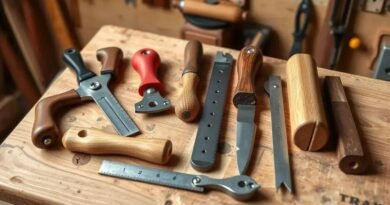
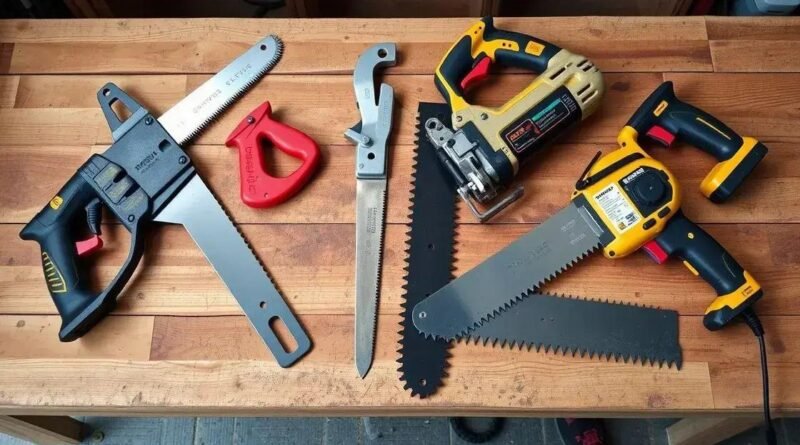
Hand saws are traditional tools that rely on manual power. They come in various styles, including rip saws for cutting with the grain and crosscut saws for cutting against it. Hand saws are great for precision cuts and delicate work.
Power Saws
Power saws, such as circular saws and jigsaws, are electrically powered and designed for efficiency. Circular saws are perfect for straight cuts, while jigsaws can handle intricate curves, making them versatile for different project needs.
Table Saws
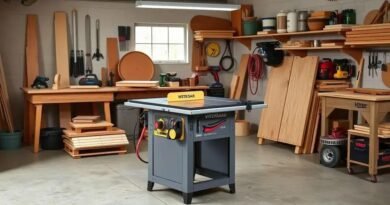
Table saws are fixed saws mounted on a table, offering stability and accuracy for various cuts. They are ideal for making repeated cuts on larger pieces of wood.
Miter Saws
Miter saws are specifically designed for angled cuts, often used in trim work and framing. They allow woodworkers to make precise miter cuts efficiently.
Band Saws
Band saws utilize a long, continuous blade for making irregular cuts and curves, making them popular for resawing lumber and creating intricate designs.
Understanding these main types of saws will help you choose the right one for your woodworking projects. Be sure to consider the specific requirements of each task before making a selection.
Key features to look for in a saw
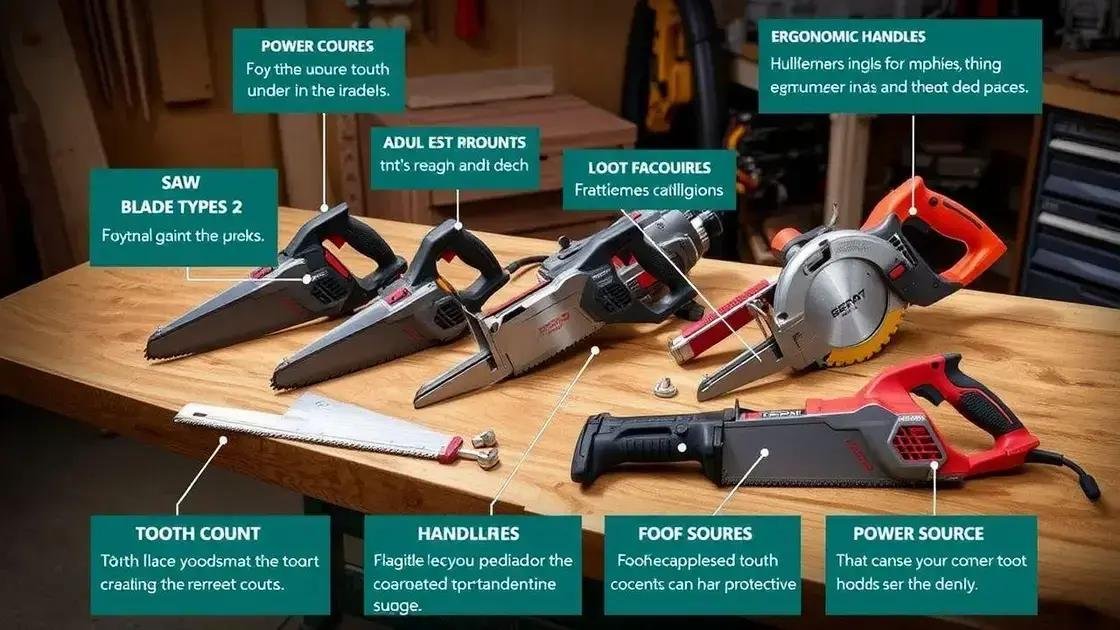
When choosing a saw for wood projects, it is crucial to consider key features that can enhance your woodworking experience. These features help determine the effectiveness and usability of the saw.
Blade Type
The blade type plays a significant role in the saw’s performance. For instance, carbide-tipped blades offer durability and precision, while high-speed steel blades can be more affordable.
Tooth Count
Tooth count dictates the smoothness of the cut. Saws with fewer teeth tend to cut faster and are ideal for framing, while those with more teeth provide smoother cuts, perfect for finish work.
Grip and Handle
A comfortable grip and handle design ensure better control and reduce fatigue during prolonged use. Look for ergonomic shapes that fit comfortably in your hand.
Power Source
Power source is another vital feature. Corded models provide consistent power, while cordless models offer mobility and convenience for outdoor projects.
Accessories and Features
Additional accessories like a laser guide can enhance accuracy, while features like speed adjustments allow for versatile cutting options. Some saws may even have built-in dust collection to keep your workspace clean.
By prioritizing these key features, you can select a saw tailored to your specific woodworking needs and projects.
Choosing the right saw for specific projects
Choosing the right saw for specific projects is essential for achieving the desired results in woodworking. Different projects require different tools, and understanding which saw to use can make all the difference.
For Cutting Large Panels
When working with large panels, such as plywood or MDF, a circular saw is a great choice. It allows for straight cuts and is easy to maneuver, making it ideal for cutting down large sheets.
For Detailed Work
If your project involves intricate details, a jigsaw or a band saw is recommended. These saws are perfect for curves and complex shapes, providing the precision needed for fine woodworking.
For Framing
For framing projects, a miter saw is invaluable. It can make quick and accurate angled cuts for corners and joints, which is essential in building frameworks, like door frames and windows.
For Finishing Touches
When it comes to making smooth cuts for finishing touches, a table saw is often preferred. This saw allows for clean, straight cuts and can handle multiple types of wood with ease.
For Crosscuts
If your project requires crosscuts, consider using a compound miter saw. It offers the ability to make both angled and bevel cuts, making it versatile for various applications.
By aligning the type of saw with the specific needs of your project, you can enhance both the efficiency and quality of your work.
Hand saw vs. power saw: which one to pick?
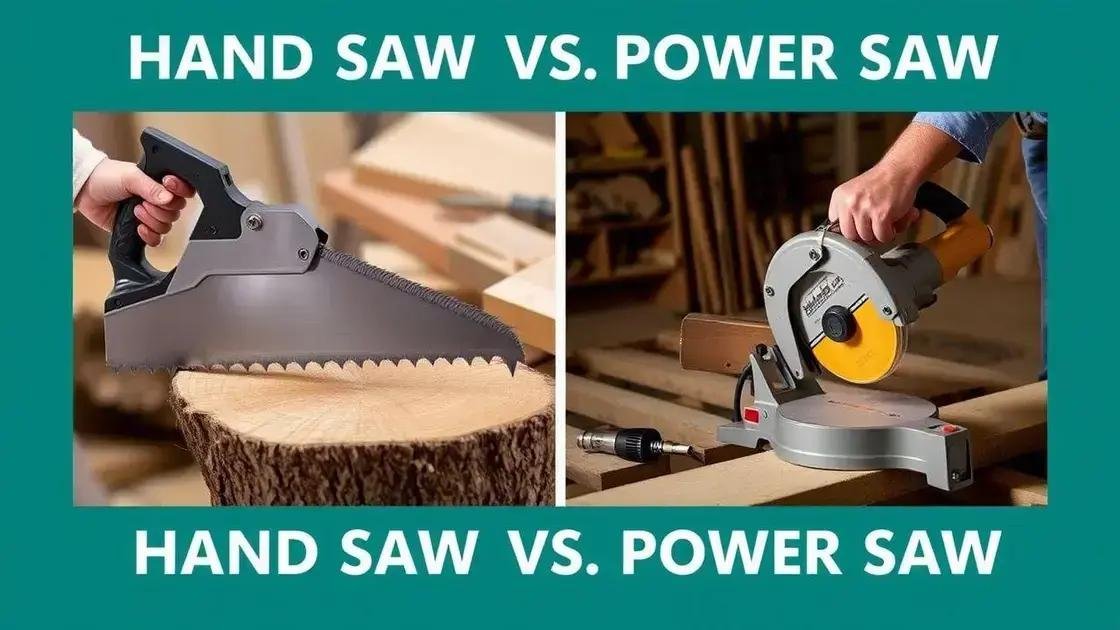
When deciding between a hand saw and a power saw, it’s important to consider the needs of your project and your personal preferences.
Hand Saw Advantages
Hand saws are lightweight and portable, making them easy to use in tight spaces. They require no electricity, which allows for use in remote locations. Additionally, hand saws offer precision for intricate cuts. Many woodworkers appreciate the traditional feel and control a hand saw provides during the cutting process.
Power Saw Advantages
Power saws are favored for their efficiency and speed. They can significantly reduce the time required for cutting, especially in larger projects. These saws are ideal for repetitive cuts due to their power and productivity. For example, a circular saw can quickly cut through thick materials with ease, making it an excellent choice for framing.
Choosing the Right Tool
Consider the scale and nature of your project. If you are working on detailed, small projects, a hand saw may be the best fit. However, for larger tasks that require speed, a power saw will likely save time and effort. Evaluate factors like budget, workspace, and comfort. If cost and maintenance are concerns, hand saws are often more affordable and easier to maintain.
Ultimately, the choice between a hand saw and a power saw depends on your specific woodworking needs. Assess what you value most for your projects—control, precision, or speed.
Safety tips when using saws
Safety is paramount when using saws in woodworking. Following proper safety tips can help prevent accidents and injuries.
Wear Protective Gear
Always wear protective gear, including safety goggles, gloves, and ear protection while using saws. This gear will shield you from dust, debris, and loud noises.
Secure Your Workpiece
Make sure to secure your workpiece properly before cutting. Use clamps or a vice to hold the material in place to prevent it from moving during the cut.
Check the Saw Before Use
Inspect the saw for any damage or wear before each use. Ensure that the blade is sharp and properly installed. A dull or damaged blade can lead to increased risk of accidents.
Use the Right Technique
Adopt the correct cutting technique for the type of saw you’re using. For example, push the saw away from your body and maintain a steady pace. Avoid forcing the saw; let the tool do the work.
Keep the Area Clean
Keep your work area clean and organized. Remove any obstacles, clutter, or distractions that could interfere with your cutting. A tidy workspace promotes safety.
Follow Manufacturer’s Instructions
Always follow the manufacturer’s instructions for operating the saw. Each saw model may have specific safety guidelines that should be adhered to.
By implementing these safety tips, you can enjoy woodworking while minimizing the risk of injury.
Maintenance tips for your saw
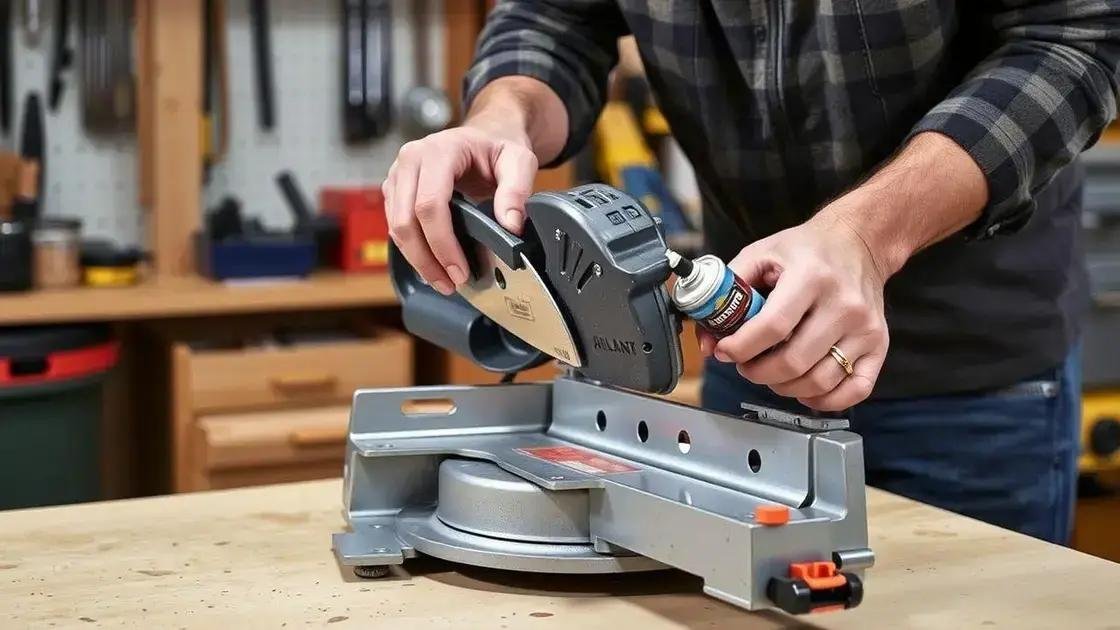
Regular maintenance is essential for keeping your saw in top condition and ensuring it performs efficiently. With a few simple steps, you can prolong the life of your saw and maintain its cutting performance.
Keep the Blade Clean
After each use, make sure to clean the blade of any sawdust, resin, or debris. Use a damp cloth or a specialized blade cleaner to remove buildup that can affect cutting quality.
Sharpen the Blade
A sharp blade is key to clean cuts. Regularly sharpen the blade according to the manufacturer’s recommendations. Dull blades can lead to poor performance and increase the risk of accidents.
Check for Wear and Damage
Inspect your saw regularly for any signs of wear and damage. Look for cracks, bends, or broken teeth on the blade. Replace any damaged parts to ensure safety and efficiency during use.
Lubricate Moving Parts
Regularly lubricate the moving parts of your saw to minimize friction and wear. This includes the pivot points and any gears. Use a light machine oil to keep everything running smoothly.
Store Properly
When not in use, store your saw in a dry place to prevent rust and corrosion. If applicable, use a saw case or hang it safely to avoid accidental damage.
By following these maintenance tips, you can keep your saw in excellent working condition, ensuring it performs reliably for all your projects.
Common mistakes to avoid when choosing a saw
Choosing the right saw can greatly impact your woodworking projects. Avoiding common mistakes can help you select a saw that meets your needs and enhances your efficiency.
Not Considering Project Type
One of the biggest mistakes is failing to consider the type of project you are working on. Different saws are designed for specific tasks. For instance, using a jigsaw for straight cuts can lead to frustration and poor results. Always match the saw to the intended use.
Ignoring Safety Features
Many people overlook the importance of safety features. Ensure that the saw has adequate safety mechanisms like blade guards and electric brakes. These features can prevent accidents and keep you safe while working.
Overlooking Blade Quality
Another common error is choosing a saw with a poor-quality blade. A high-quality blade is essential for effective cutting. Ensure the blade is suitable for the material you will work with and is designed for your specific saw type.
Not Evaluating Comfort and Handling
It’s essential to evaluate comfort and handling before purchasing a saw. Test the weight, grip, and balance of the saw. An uncomfortable tool can cause fatigue and affect your performance during long projects.
Forgetting Maintenance Considerations
Finally, many overlook maintenance requirements. Consider how easy it is to clean, sharpen, and maintain the saw. A tool that requires extensive upkeep may not be worth your time or effort.
By avoiding these common mistakes, you can make an informed decision and choose the right saw for your woodworking needs.
Top brands and models for woodworkers
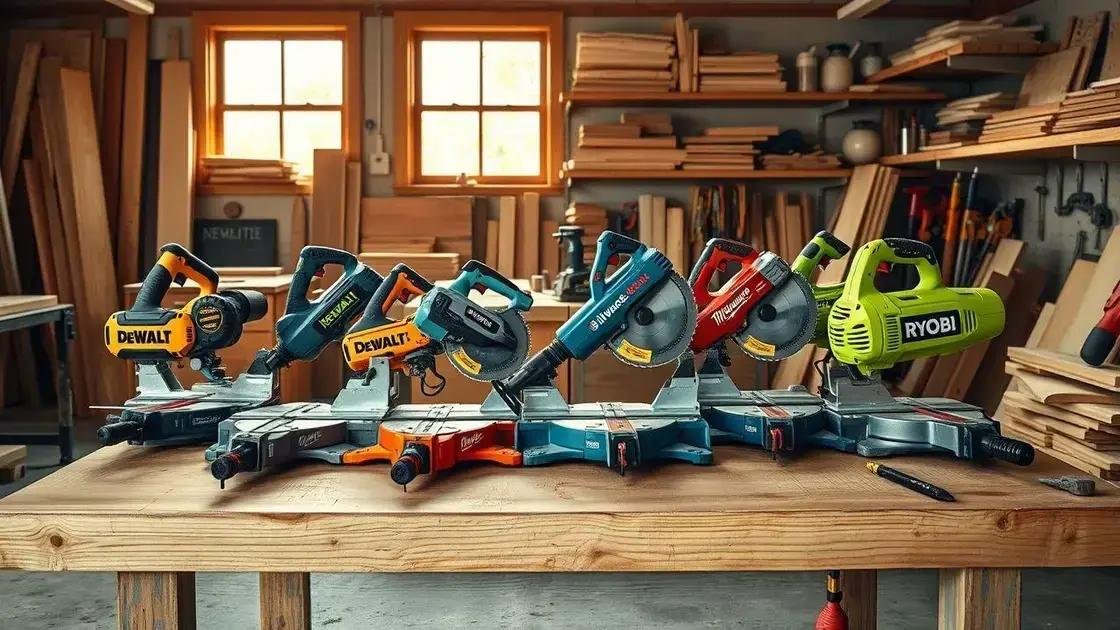
Choosing the right saw can be made easier by considering some of the top brands and models popular among woodworkers. These brands are known for their quality, reliability, and performance.
DeWalt
DeWalt offers a wide range of saws suitable for both professionals and DIY enthusiasts. The DeWalt DWS780 is a dual bevel sliding miter saw known for its precision and durability, making it a favorite for trim work and framing projects.
Makita
Makita is well-respected for its innovative tools. The Makita XSH03PT is a cordless circular saw that provides excellent cutting performance and battery life, ideal for jobs where power outlets are limited.
Bosch
Bosch is known for its user-friendly designs and safety features. The Bosch GCM12SD is a glide miter saw that offers a compact design and smooth operation, perfect for tight working spaces.
Milwaukee
Milwaukee focuses on durability and power. The Milwaukee M18 Fuel saw series offers cordless options that deliver superior performance and runtime, allowing woodworkers to tackle various tasks efficiently.
Ryobi
Ryobi is popular for its affordability and versatile tools. The Ryobi P551 is a well-reviewed cordless circular saw known for its easy handling and effectiveness for light-duty tasks, making it a great choice for beginners.
By exploring these top brands and their models, woodworkers can find reliable tools that suit their needs and enhance their projects.
In summary, choosing the right saw for your wood projects
Choosing the right saw is crucial for achieving high-quality results in your woodworking tasks. By understanding the different types of saws, their key features, and the specific needs of your projects, you can make informed decisions.
Moreover, following safety tips and maintenance practices ensures that your tools perform optimally and last longer. By avoiding common mistakes, you’ll be better equipped to find the perfect saw for your needs.
Finally, exploring top brands and models can guide you in selecting reliable tools that enhance your woodworking experience. With the right saw, you can take on any project with confidence.
FAQ – Frequently Asked Questions About Choosing the Right Saw for Wood Projects
What type of saw is best for beginners?
For beginners, a hand saw or a basic power saw, like a circular saw, is recommended due to their ease of use and versatility.
How can I maintain my saw for long-lasting performance?
Regularly clean the blade, sharpen it when necessary, check for damage, and lubricate moving parts to ensure optimal performance.
What safety gear should I wear while using a saw?
Always wear safety goggles, gloves, and ear protection to protect yourself from dust, debris, and noise when using saws.
Is it essential to choose a specific saw for each project?
Yes, selecting the right saw based on the project type is key to achieving accurate cuts and high-quality results.
Can I use a power saw for fine woodworking?
While power saws are great for efficiency, hand saws are often preferred for fine woodworking due to their precision and control.
What are some popular saw brands among woodworkers?
Top brands include DeWalt, Makita, Bosch, Milwaukee, and Ryobi, known for their quality and reliability.