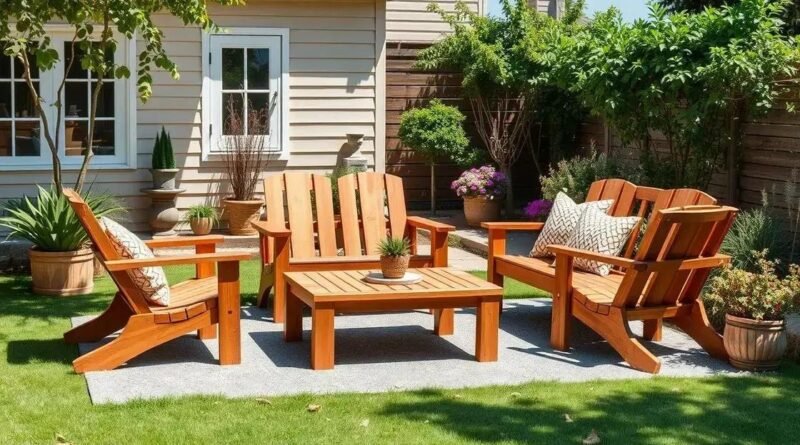
DIY outdoor furniture woodworking plans: Build your dream pieces easily
DIY outdoor furniture woodworking plans enable you to create unique, durable pieces using various materials, and incorporating maintenance techniques ensures their longevity and beauty in your outdoor spaces.
If you’ve ever dreamed of creating your own outdoor oasis, DIY outdoor furniture woodworking plans are a great way to start. Imagine relaxing on furniture you crafted yourself while enjoying nature. Ready to dive in?
Choosing the right wood for outdoor furniture
Choosing the right wood for your outdoor furniture is essential for durability and aesthetics. Certain types of wood perform better outdoors due to their natural resistance to elements.
Recommended Woods for Outdoor Furniture
Common choices include teak, known for its durability and beautiful golden hue, and cedar, which naturally resists rot and insects. Redwood is another great option, offering both strength and natural beauty, while pressure-treated pine is an economical choice that can withstand the elements if properly sealed.
Considerations for Wood Selection
When selecting wood, consider factors like climate, exposure to moisture, and desired maintenance level. For example, if you live in a humid area, opting for naturally water-resistant woods like teak or cedar is wise. Think about how much time you want to spend maintaining your furniture—some woods require more care than others.
Finishing Your Wood
Applying sealants or stains can enhance the wood’s resistance to the elements, prolonging the life of your furniture. Be sure to choose products that are appropriate for outdoor use, as they provide a protective barrier against sun, rain, and temperature changes.
Overall, the right wood will enhance both the functionality and appearance of your outdoor furniture. Take your time to research and select materials that match your needs and style.
Essential tools for woodworking

When starting your woodworking project, having the right tools is essential for success. Here are some essential tools that every woodworking enthusiast should consider.
Hand Tools
Begin with basic hand tools such as a handsaw, chisel set, and hammer. These tools are invaluable for making precise cuts and shaping wood. A good quality measuring tape and square ensure accurate dimensions are achieved in your work.
Power Tools
If you’re looking to speed up the process, invest in power tools like a circular saw, jigsaw, and router. These tools will help you create complex cuts and designs more efficiently. A drill is also a must-have for making holes and driving screws.
Workbenches
A sturdy workbench provides a reliable surface for all your projects. Look for one with clamps to secure your wood while working. A good workbench increases safety and improves the quality of your work.
Sanding and Finishing Tools
To achieve smooth surfaces, you’ll need sanding tools. Use both hand sanders and power sanders to finish your projects. Additionally, having a selection of brushes and rollers is crucial for applying stains and finishes to protect your wood and enhance its appearance.
Remember, the right tools can make a significant difference in the quality of your work and the enjoyment of your woodworking experience.
Step-by-step guide to building a picnic table
Building a picnic table is a rewarding DIY project that can enhance your outdoor space. Follow this step-by-step guide to create a sturdy and attractive picnic table.
Materials Needed
Gather the following materials to get started:
- Wood: Choose durable wood like cedar or pressure-treated pine.
- Wood screws: Get plenty to secure the table parts.
- Wood glue: Optional, but it adds extra strength.
- Sandpaper: For smoothing the wood surfaces.
- Paint or stain: To protect and finish the table.
Tools Required
You will need these tools:
- Saw: A circular saw or miter saw works best.
- Drill: To make holes and drive screws.
- Measuring tape: For precise measurements.
- Square: To ensure everything is aligned properly.
Step 1: Cut the Wood
Start by cutting your wood to the following dimensions:
- Tabletop boards: Cut five pieces at 6 feet each.
- Table legs: Cut four pieces at 30 inches each.
- Table support beams: Cut two pieces at 6 feet each.
Step 2: Assemble the Tabletop
Lay the five tabletop boards side by side. Then, secure them using two support beams underneath, spaced evenly apart. Use wood screws and glue for a strong bond.
Step 3: Attach the Legs
To attach the legs, use the 30-inch boards. Secure each leg to the corners of the tabletop using screws. Ensure each leg is straight and at a right angle.
Step 4: Add Cross Supports
For additional stability, add cross supports between the legs by connecting two pieces of wood vertically.
Step 5: Finish the Table
Once the table is assembled, sand any rough edges and surface. Then, apply your choice of paint or stain to protect the wood from the elements.
Allow your picnic table to dry completely before using it. With your new homemade table, you can enjoy meals outdoors with family and friends!
Creating comfortable outdoor seating
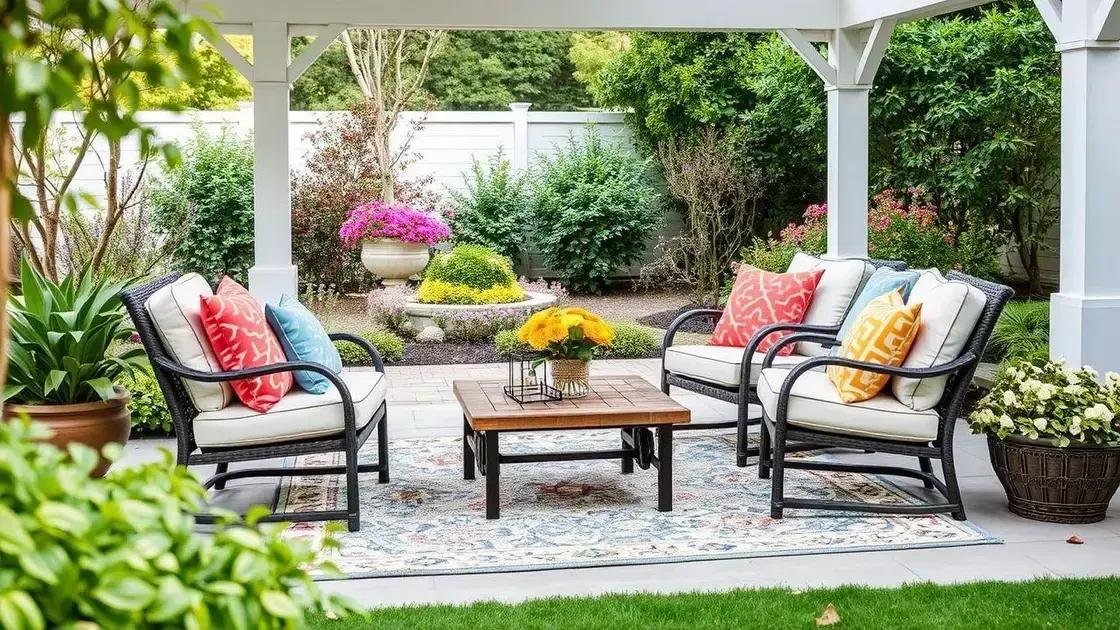
Creating comfortable outdoor seating can transform your backyard into a relaxing retreat. Here are some tips to ensure your outdoor seating is both stylish and inviting.
Choosing the Right Cushion Material
Select cushions made from weather-resistant fabrics such as acrylic or polyester. These materials resist fading and help keep moisture out, making them ideal for outdoor use. Look for cushions with waterproof properties and easy-to-clean covers.
Designing for Comfort
When designing your seating arrangement, consider using overstuffed cushions and ergonomic shapes that support your body. You can also add throw pillows for extra comfort and style, mixing various sizes and colors that complement your outdoor decor.
Creating Shade
Provide shade to enhance comfort by using umbrellas or canopies. Natural shade from trees can also be beneficial. Consider placing seating near these shaded areas to make lounging enjoyable even during the hottest days.
Incorporating Accessories
To create a cozy atmosphere, add accessories like outdoor rugs to define the seating area and bring warmth. String lights or lanterns can add ambiance during evening gatherings, making the space feel welcoming.
Maintaining Your Seating
Regular maintenance ensures longevity. Store cushions indoors during rain or winter to prevent damage. Clean them periodically according to the manufacturer’s instructions to keep colors vibrant and materials fresh.
By focusing on these elements, you can create comfortable outdoor seating that invites family and friends to relax and enjoy your outdoor space.
Design tips for custom furniture
Designing custom furniture can make your space unique and functional. Here are some design tips to help you create furniture that fits your needs and style.
Understand Your Space
Before jumping into the design, take measurements of the area where the furniture will go. Consider factors such as traffic flow and how the furniture will fit with existing decor. This will guide your design choices and prevent overcrowding.
Choose the Right Materials
Selecting the right materials is crucial for both durability and aesthetics. Use hardwoods like oak or maple for strength, while softer woods like pine can offer a rustic look. For tabletops, consider high-quality laminates or glass for a modern touch.
Focus on Functionality
Think about how the furniture will be used. If you need a table for dining, ensure it’s at a comfortable height and size for your family. Adding features like storage compartments or foldable components can enhance functionality without sacrificing style.
Add Personal Touches
Incorporate elements that reflect your style. You can choose colors, patterns, and hardware that resonate with your taste. Customizing details such as legs, handles, and textures can elevate the look of your furniture significantly.
Plan for Comfort
If your furniture will be used for seating, prioritize comfort. Incorporate soft cushions and supportive designs that invite relaxation. Measure cushion depths and heights to ensure they are suitable for anyone using the furniture.
Consider Future Needs
When designing custom furniture, think about your long-term needs. Choose styles that are timeless or easily adaptable to changes in decor over time. Building flexibility into your designs ensures they remain useful for years to come.
Finishing techniques to protect your work

Finishing techniques are crucial for protecting your woodworking projects and enhancing their appearance. Here are some effective methods to consider.
Choosing the Right Finish
Select a finish based on the type of project and the level of durability you need. Some popular options include polyurethane, which offers excellent protection against scratches and moisture, and varnish, which provides a beautiful, natural look. Oil finishes like boiled linseed oil penetrate the wood, nourishing and enhancing its grain.
Preparation of the Surface
Before applying any finish, ensure the surface is clean and smooth. Sand the wood with progressively finer grits, starting with 120-grit sandpaper and finishing with 220-grit. This prepares the surface for a better bond with the finish.
Application Techniques
When applying finishes, use a brush or rag for best results. For larger areas, consider using a sprayer for an even coat. Always follow the manufacturer’s instructions for the best application techniques, such as applying in thin layers and allowing sufficient drying time between coats.
Sealing the Wood
Applying a sealant can protect your work from moisture and dirt. A clear sealant can be applied over stained wood to preserve its color while providing a layer of protection. Look for products specifically designed for woodworking to ensure compatibility with your finish.
Regular Maintenance
To keep your furniture looking its best, perform regular maintenance. This can include cleaning with microfiber cloths and reapplying finishes as needed to maintain protection and aesthetics. Proper care will ensure your handiwork lasts for years.
Upcycling materials for unique furniture
Upcycling materials is a fantastic way to create unique furniture while also being environmentally friendly. Here are some tips for getting started.
Finding Materials
Look for items that can be transformed, such as old furniture, pallets, or even crates. Thrift stores, garage sales, and online marketplaces are great places to find inexpensive materials.
Creative Ideas for Upcycling
Consider different projects, like turning an old door into a table or using pallets to create outdoor seating. You can also create shelves from reclaimed wood or transform vintage suitcases into stylish storage solutions.
Tools and Supplies Needed
Basic tools you may need include a saw, drill, sandpaper, and paint or stain for finishing. Ensure you have safety gear, such as goggles and gloves, to protect yourself during the project.
Planning Your Design
Before beginning, sketch out your design. Think about the shape, size, and functionality of the piece. You can use online design tools or simply draw on paper. This step will help you visualize the final product and make any adjustments needed.
Executing the Project
Once you have your materials and design ready, start the transformation. Carefully disassemble any pieces if needed, and make the necessary cuts. Assemble the furniture according to your design plan, securing everything with screws or nails.
Finishing Touches
After the assembly, give the piece a good sanding to smooth out any rough edges. You can paint or stain your furniture to match your style. Adding a protective finish will ensure your creation lasts long-term.
Maintenance tips for longevity

Taking proper care of your furniture ensures it lasts for years. Here are some maintenance tips for longevity to keep your furniture in great shape.
Regular Cleaning
Dust your furniture regularly using a soft, lint-free cloth. For wooden furniture, use a mild soap solution when necessary. Avoid harsh chemicals that can damage the finish. Always follow with a damp cloth, then dry thoroughly.
Avoid Direct Sunlight
Direct sunlight can fade and damage your furniture. Place items away from windows or use window treatments to reduce sun exposure. Consider using a UV-protective spray on your surfaces for added protection.
Use Coasters and Placemats
Coasters protect wooden surfaces from water rings and heat damage. Always use placemats during meals to prevent scratches on dining tables. These simple habits can significantly reduce wear and tear.
Periodic Polishing
For wooden furniture, polishing every few months can maintain its shine and protective layer. Choose a high-quality furniture polish and apply it with a soft cloth. This protects the wood and enhances its natural beauty.
Check for Wear and Tear
Regularly inspect your furniture for any signs of damage such as loose joints or scratches. Addressing issues promptly can prevent further damage. Tighten screws and bolts as needed, and touch up any scratches with a matching stain or paint.
Conditioning Upholstered Furniture
For upholstered pieces, vacuum them weekly to remove dust and debris. Consider using a fabric protector to repel spills. For stains, treat them as soon as possible according to the manufacturer’s instructions.
In conclusion, creating beautiful and functional outdoor furniture is achievable for anyone
From selecting the right materials to utilizing upcycled items, every step contributes to a stunning result. Maintenance is crucial for ensuring longevity, as it keeps your furniture looking brand new.
By embracing DIY projects, you can design unique pieces that suit your style and needs. Remember to have fun and let your creativity shine as you build your outdoor oasis.
With these tips in mind, you’re well on your way to enjoying a space you love!
FAQ – Frequently Asked Questions About DIY Outdoor Furniture
What materials are best for outdoor furniture?
Durable woods like teak, cedar, or pressure-treated pine are great choices as they withstand weather conditions well.
How do I maintain my outdoor furniture?
Regularly clean it with mild soap, avoid direct sunlight, and use coasters to prevent damage.
Can I upcycle old furniture for outdoor use?
Yes, upcycling old furniture is a sustainable way to create unique outdoor pieces. Just ensure they are treated for outdoor conditions.
What are some design tips for custom furniture?
Consider functionality, choose materials that suit your style, and plan your design carefully to fit your space.
How can I ensure my furniture lasts longer?
Perform regular maintenance, store furniture during harsh weather, and apply protective finishes to enhance durability.
What finishing techniques are recommended for outdoor furniture?
Use weather-resistant finishes like polyurethane or varnish to protect surfaces from moisture and UV rays.