
Diy woodshop project: build your dream workspace with ease
A well-equipped DIY woodshop enhances your woodworking experience through proper organization, effective lighting, and personalized touches, ensuring a safe and inspiring environment for all your projects.
If you’re dreaming of a cozy workspace, a diy woodshop project could be exactly what you need. It’s more than just a hobby; it’s a chance to create a space where every cut and joint comes to life. Let’s dive into how you can get started!
Choosing the right tools for your diy woodshop
Choosing the right tools for your diy woodshop is crucial for efficiency and quality in your projects. Start by identifying the types of woodworking you’ll be doing, as different projects may require specific tools.
Essential Tools for Your Woodshop
Every woodshop should have a basic set of essential tools. A table saw is invaluable for making straight cuts and crosscuts. A miter saw is perfect for precise angled cuts, while a drill is necessary for creating holes and driving screws.
Power vs. Hand Tools
When deciding between power tools and hand tools, consider your skill level and the projects you plan to tackle. Power tools can significantly speed up your work but may require a learning curve. Hand tools, on the other hand, offer more control and are often less expensive.
Budgeting for Your Tools
Set a budget for your tool purchases. Investing in high-quality tools can save you money in the long run, as they typically last longer and perform better. Look for improved features that enhance usability and safety.
Tool Maintenance
Once you have your tools, regular maintenance is vital. Keep blades sharp and tools clean to ensure safety and performance. Storing tools properly will also extend their life and keep your workspace organized.
Space planning: maximizing your woodshop efficiency
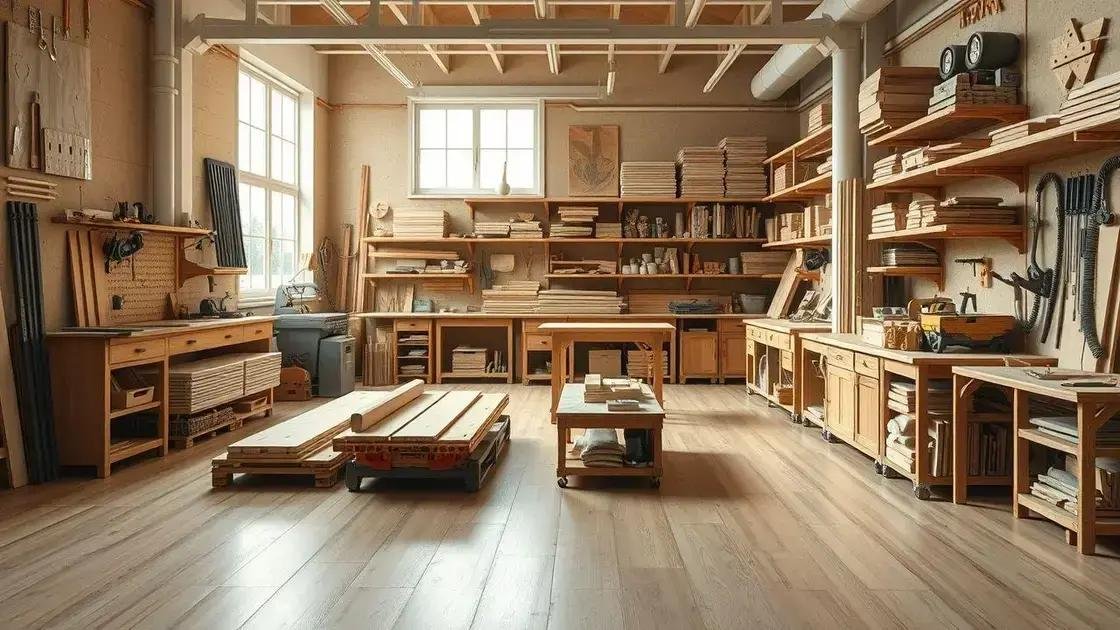
Space planning is essential for maximizing your woodshop efficiency. A well-organized shop can enhance workflow and make it easier to find tools and materials when you need them. Start by assessing your available space and planning how to best utilize it.
Layout Considerations
Consider the layout of your workspace. Arrange tools and work surfaces in a way that allows for smooth movement. Keep frequently used tools within easy reach to minimize time spent searching for them. A good practice is to create a triangular setup with your primary tools.
Zoning Your Woodshop
Divide your woodshop into different zones based on tasks. For example, you might have a cutting zone, assembly zone, and finishing zone. This helps to keep activities organized and prevents clutter from building up in one area.
Storage Solutions
Efficient storage is key in a woodshop. Use wall-mounted shelves, pegboards for hanging tools, and cabinets to keep materials organized. Labeling storage areas can also help you quickly find what you need, reducing downtime.
Work Surface Placement
Your work surfaces should be positioned for comfort and efficiency. Ideally, a workbench should be at a height that allows you to work without straining your back. Make sure there’s enough space around each surface for movement and workflow.
Essential safety tips for your woodshop
Maintaining safety in your woodshop is crucial. Here are some essential safety tips to keep in mind while working on your projects.
Wear Proper Personal Protective Equipment
Always wear the right personal protective equipment (PPE). This includes safety glasses, ear protection, and a dust mask. Wearing gloves can protect your hands from splinters, but make sure they are appropriate for the task at hand.
Understand Your Tools
Before using any tool, take the time to read the manual and understand its operation. Knowing the features and potential hazards of each tool can prevent accidents.
Keep the Workspace Clean
A tidy workspace reduces the risk of accidents. Always clean up wood shavings and dust after each project. Remove any clutter from your work area to prevent tripping hazards.
Use Tools as Intended
Always use tools for their intended purpose. Do not modify tools or use them for tasks they were not designed for. This is crucial for preventing injuries and ensuring that tools function correctly.
Keep Emergency Procedures in Mind
Have a first aid kit readily available in your woodshop. Know the steps to take in case of an injury, and make sure you have a plan for getting help if needed.
Creating a solid workbench for your projects
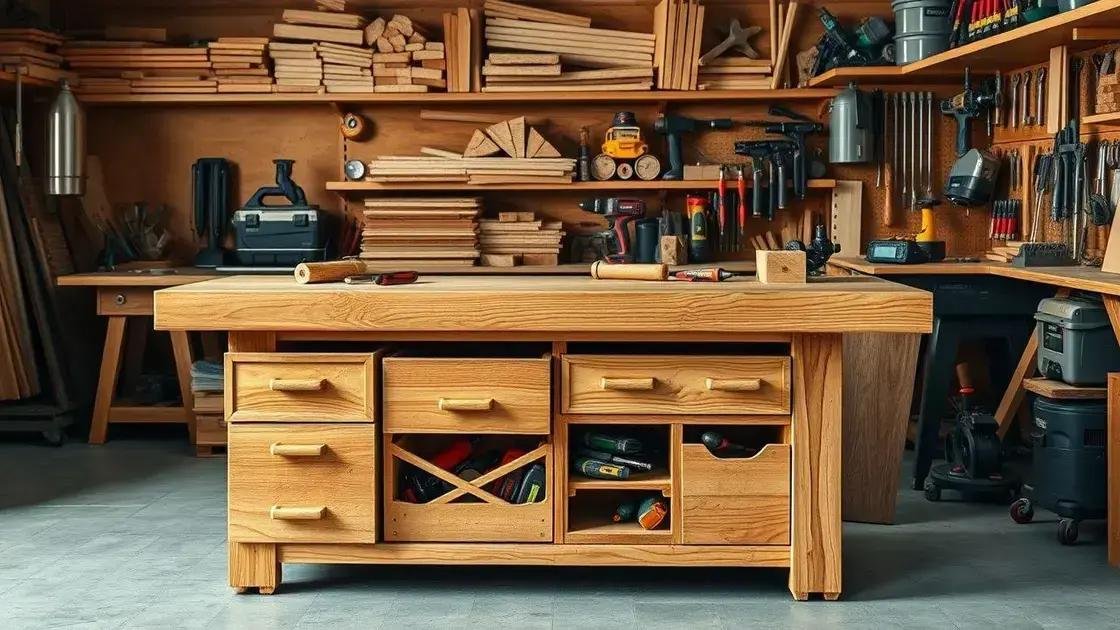
Creating a solid workbench is essential for any diy woodshop project. A well-built workbench provides a stable surface for all your woodworking tasks. Here are key points to consider when building your workbench.
Choosing the Right Materials
Select materials that are durable and well-suited for your projects. Hardwoods, such as maple or oak, are excellent choices for the top surface due to their strength and resistance to wear.
Workbench Height
The height of your workbench should be comfortable for you to work at. A general rule is to have the top of the bench at about waist height. This allows for easier use of tools and reduces strain during lengthy projects.
Workbench Design
Consider the design of your workbench. It should include enough space for your tools and materials. An effective design incorporates storage solutions, like drawers or shelves, to keep your workspace organized.
Stability and Support
Ensure that your workbench is stable to prevent wobbling during work. Use thick legs and cross-bracing to add strength. Adding weight to the base can also enhance stability.
Finishing Touches
Once your workbench is built, you may want to finish the surface. Applying a coat of protective oil or varnish helps guard against damage from glue, stains, and wear over time.
Organizing materials and tools effectively
Organizing materials and tools effectively is crucial for enhancing productivity in your diy woodshop. A well-organized workspace allows for easier access to the tools and materials you need, saving you time and effort. Here are some strategies to keep your workspace tidy.
Use Storage Solutions
Implement various storage solutions to keep your tools and materials organized. Utilize cabinets, shelves, and toolboxes to store items neatly. Label each storage area to know exactly where everything belongs.
Wall-Mounted Storage
Consider using wall-mounted storage to minimize floor clutter. Hanging pegboards can hold tools, while slat walls can accommodate hooks and bins. This frees up valuable workbench space and keeps items in sight.
Group Similar Items
Group similar tools and materials together. For example, keep your cutting tools in one area and hand tools in another. This method makes it much easier to find what you need and prevents searching through disorganized piles.
Maintain Regular Cleaning Routines
Establish a regular cleaning routine to maintain organization. Spend a few minutes at the end of each session cleaning up and returning tools to their designated places. This habit will help you stay organized in the long run.
Invest in Clear Bins
Use clear storage bins for smaller materials and supplies. This allows you to see what you have at a glance, making it easier to grab what you need without digging through boxes.
Lighting solutions for your woodshop
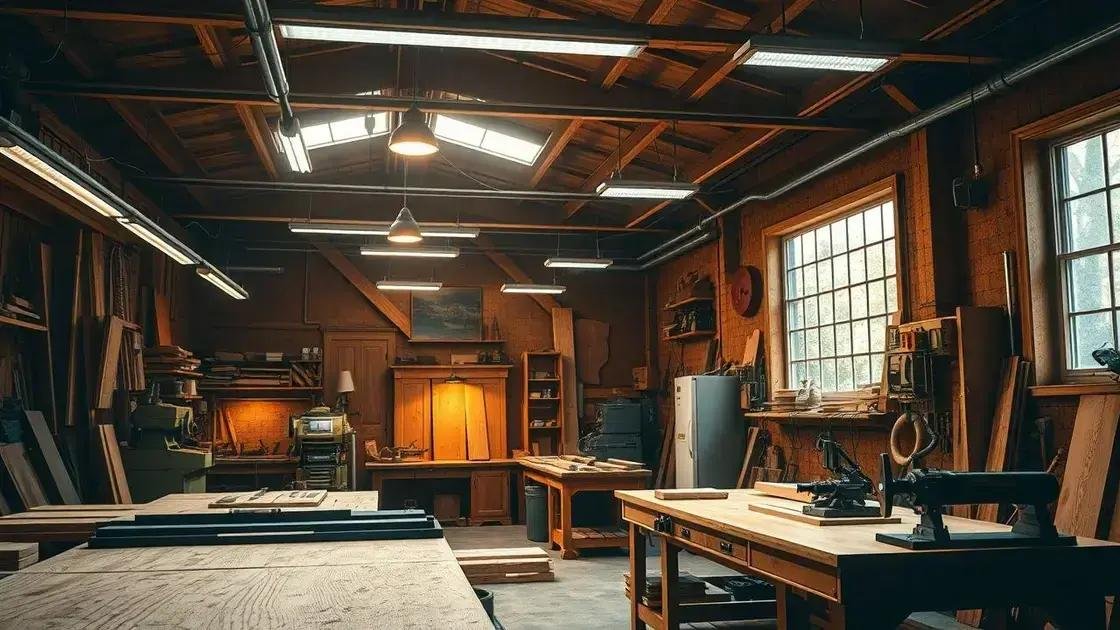
Lighting is a vital aspect of any woodshop. Adequate lighting improves visibility and helps ensure safety while working on projects. Here are some effective lighting solutions to enhance your woodshop environment.
Overhead Lighting
Install bright overhead lights to illuminate the entire workspace. LED shop lights are energy-efficient and provide excellent brightness. Consider placing them evenly throughout the space to avoid dark corners.
Task Lighting
Incorporate task lighting for areas where detailed work is performed. Use adjustable lamps or light strips above your workbench to direct light exactly where you need it. This reduces shadows and improves focus while working on intricate details.
Natural Light
If possible, take advantage of natural light by placing your woodshop near windows. Natural sunlight can enhance your workspace and reduce the need for artificial lighting during the day. Use sheer curtains to diffuse bright sunlight while still allowing light in.
Portable Work Lights
For added flexibility, consider having portable work lights on hand. These can be moved to different areas as needed, making them ideal for spot lighting specific projects or tasks without having to rearrange your permanent lighting setup.
Safety Considerations
When setting up lighting in your woodshop, ensure that all electrical installations comply with safety standards. Use lights rated for workshop environments to reduce the risk of electrical hazards. Install switches in accessible locations to easily turn lights on and off.
Incorporating dust collection systems
Incorporating a dust collection system in your woodshop is essential for maintaining a clean and safe working environment. Dust and debris can be harmful to your health and can create a cluttered workspace. Here are some effective strategies for setting up a dust collection system.
Understanding Dust Collection Systems
Dust collection systems can vary in size and complexity, from simple shop vacuums to advanced stationary systems. It’s important to understand the specific needs of your woodshop to choose the right system.
Choosing the Right System
For small woodshops, a portable shop vacuum with a dust collection attachment may be sufficient. Larger shops might benefit from a centralized dust collection system that can connect to multiple tools at once, improving efficiency.
Tool Integration
To maximize dust collection, ensure that each tool is connected to the dust system. Use appropriate hoses and fittings to prevent leaks and loss of suction. Many power tools now come with built-in dust ports for easy connection.
Regular Maintenance
Regular maintenance of your dust collection system is necessary for optimal performance. Clean or replace filters as recommended by the manufacturer. Empty dust bags or bins frequently to avoid clogs and maintain airflow.
Abiding by Safety Regulations
Lastly, ensure that your dust collection system follows safety regulations. This includes proper ventilation and fire safety measures, especially if using an electrical system that may generate sparks.
Adding personal touches to inspire creativity

Adding personal touches to your woodshop can greatly enhance creativity and make the space uniquely yours. A personalized environment boosts inspiration and can lead to more enjoyable crafting experiences.
Display Your Work
Consider displaying your finished projects or favorite pieces of art in your workspace. This serves as a constant reminder of your skills and can motivate you when starting new projects.
Incorporate Color
Using color can profoundly impact your mood and creativity. Paint your walls or workbench in colors that inspire you. Bright colors can energize the space, while softer tones can create a calm atmosphere for focus.
Personalized Storage Solutions
Design custom storage solutions that reflect your style. Use decorative boxes, labeled bins, or even repurposed furniture to add charm to your space. This not only organizes your materials but also contributes to the overall aesthetic.
Sensorial Elements
Incorporate sensory elements like plants or scented candles to make the environment more inviting. Greenery can improve air quality and create a relaxing atmosphere, while calming scents can enhance your focus and creativity.
Functional Art
Consider integrating functional art into your woodshop. This could be a custom-made tool holder or artistic shelves that both enhance organization and showcase your artistic flair. Combining function with aesthetics can make your workspace more enjoyable.
Creating Your Perfect Woodshop
Designing a functional and inspiring woodshop can significantly enhance your woodworking experience. By incorporating practical tools, effective storage solutions, and personalized touches, you can create an environment that fosters creativity and productivity.
Remember to prioritize safety with adequate lighting and dust collection systems. Organizing your materials and tools ensures a smooth workflow, allowing you to focus on your projects. The right combination of functionality and personal flair will make your woodshop a space you love to work in.
So, take the time to plan and set up your woodshop. With the right elements in place, you will be well-equipped to tackle any diy woodshop project that comes your way.
FAQ – Frequently Asked Questions about Your Woodshop Setup
What are the essential tools for a DIY woodshop?
Some essential tools include a table saw, miter saw, drill, and a reliable workbench to help you complete a variety of woodworking projects.
How can I enhance safety in my woodshop?
You can enhance safety by wearing appropriate protective gear, maintaining a clean workspace, and using proper lighting to illuminate all work areas.
What is the best way to organize my tools and materials?
Utilize storage solutions like cabinets and pegboards to keep tools accessible and tidy. Group similar items together for easy access.
How can I create a more inspiring woodshop environment?
Add personal touches such as displaying completed projects, using colors that inspire you, and incorporating plants or art pieces to enhance creativity.
Why is lighting important in a woodshop?
Good lighting improves visibility, reduces eye strain, and helps ensure you work safely, especially during intricate tasks.
What should I consider when setting up a dust collection system?
Choose a system that fits your shop size, ensure all tools are connected, and perform regular maintenance to keep it functioning efficiently.